
The Baltic Sea Begins in the Marina: ECOMARINAS and Lessons from Rügen
ECOMARINAS Study Visit in Stralsund, April 8–9, 2025
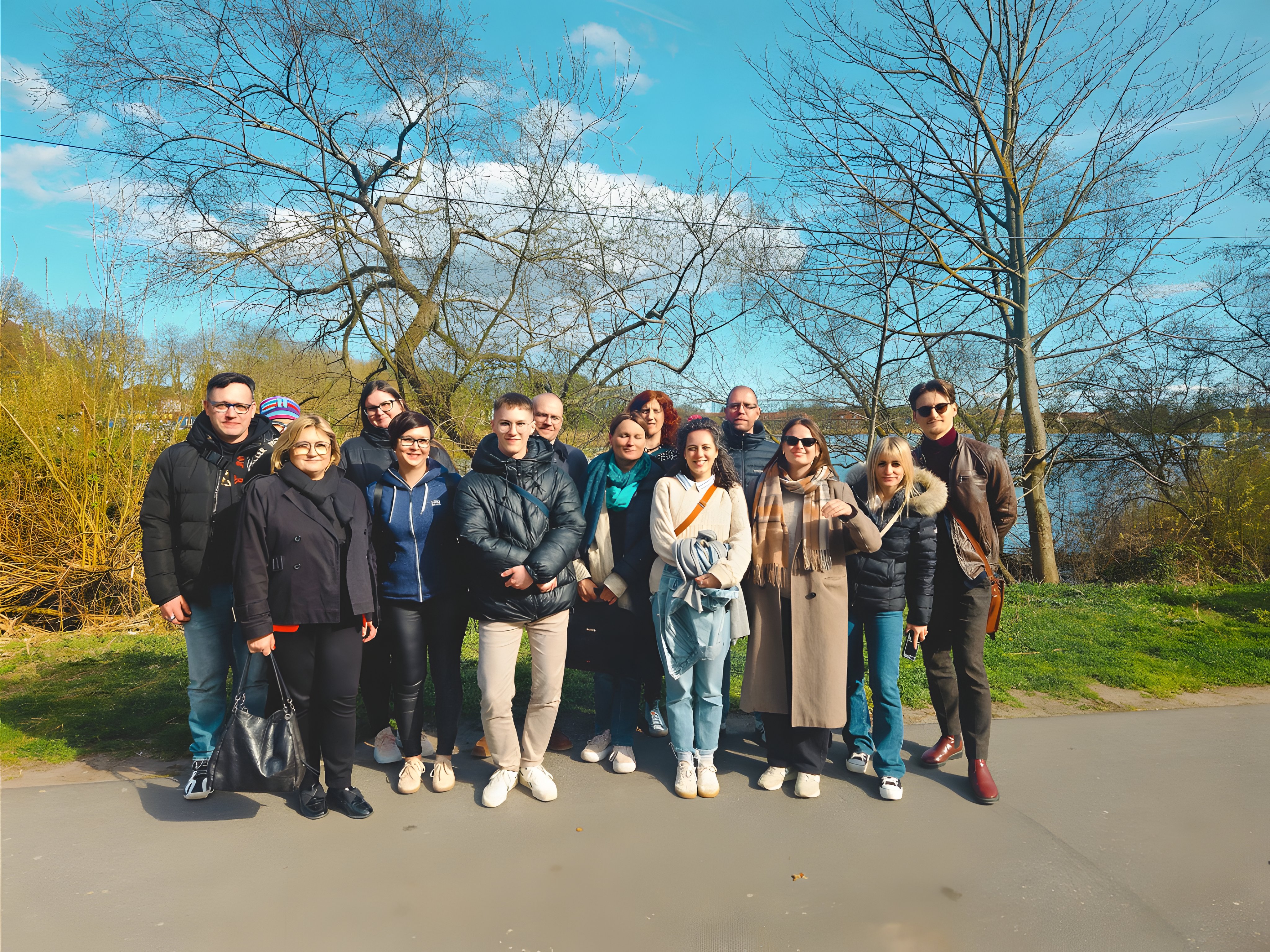
Spring on the Baltic Sea. On April 8-9, a study visit of the ECOMARINAS project took place in Stralsund, Germany. ECOMARINAS is a strategic initiative under the Interreg South Baltic Programme 2021-2027. Project partners from Poland, Germany, Sweden, and Lithuania gathered to explore good practices in ecological marina management on the Baltic Sea and to exchange knowledge through hands-on workshops. The two-day program was intensive – including a morning excursion to the Gustow marina on Rügen Island, afternoon workshop sessions in Stralsund, and a demonstration of technologies used for managing hazardous substance spills.
Gustow Marina – Ecological Management in a Unique Setting
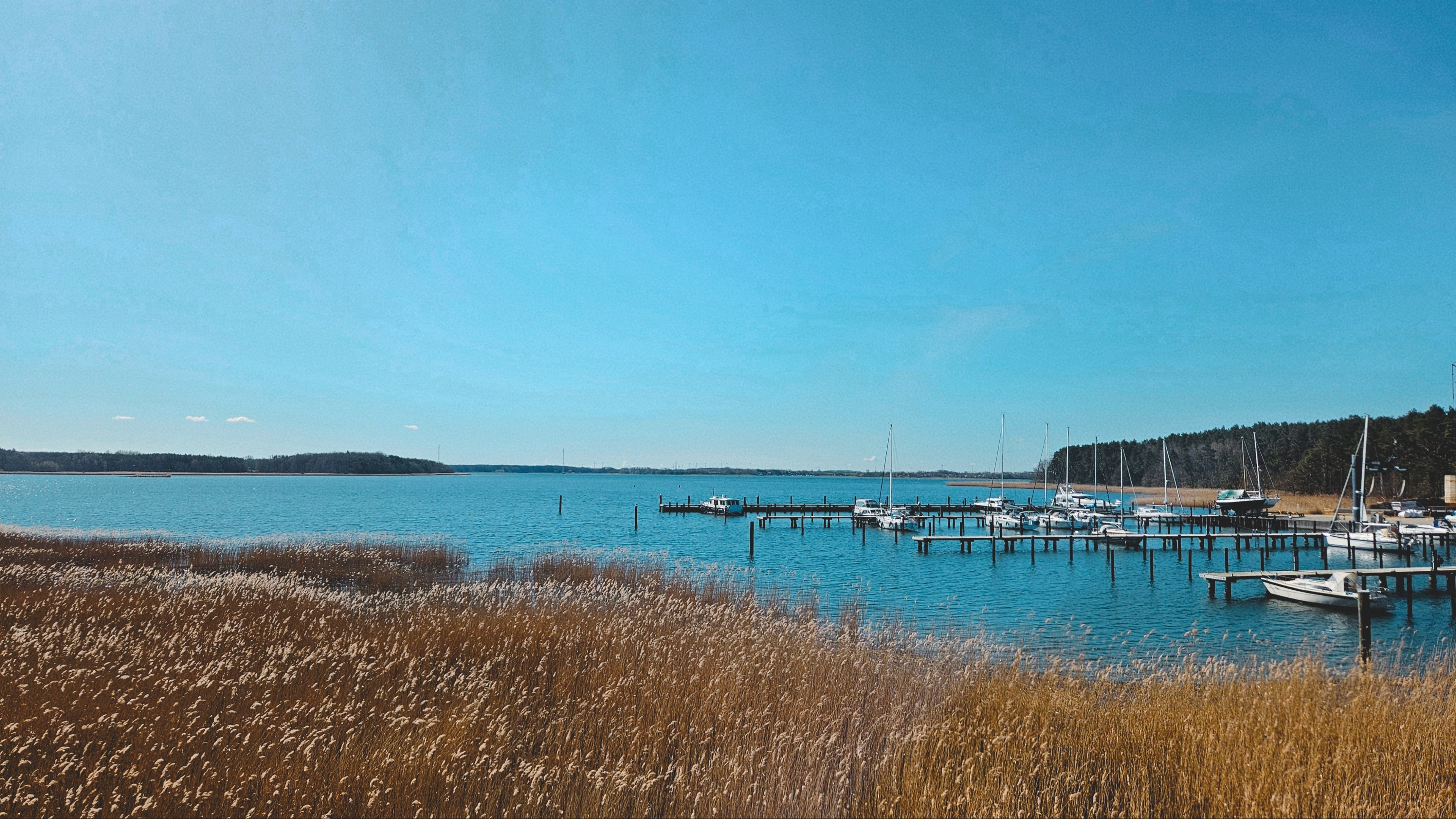
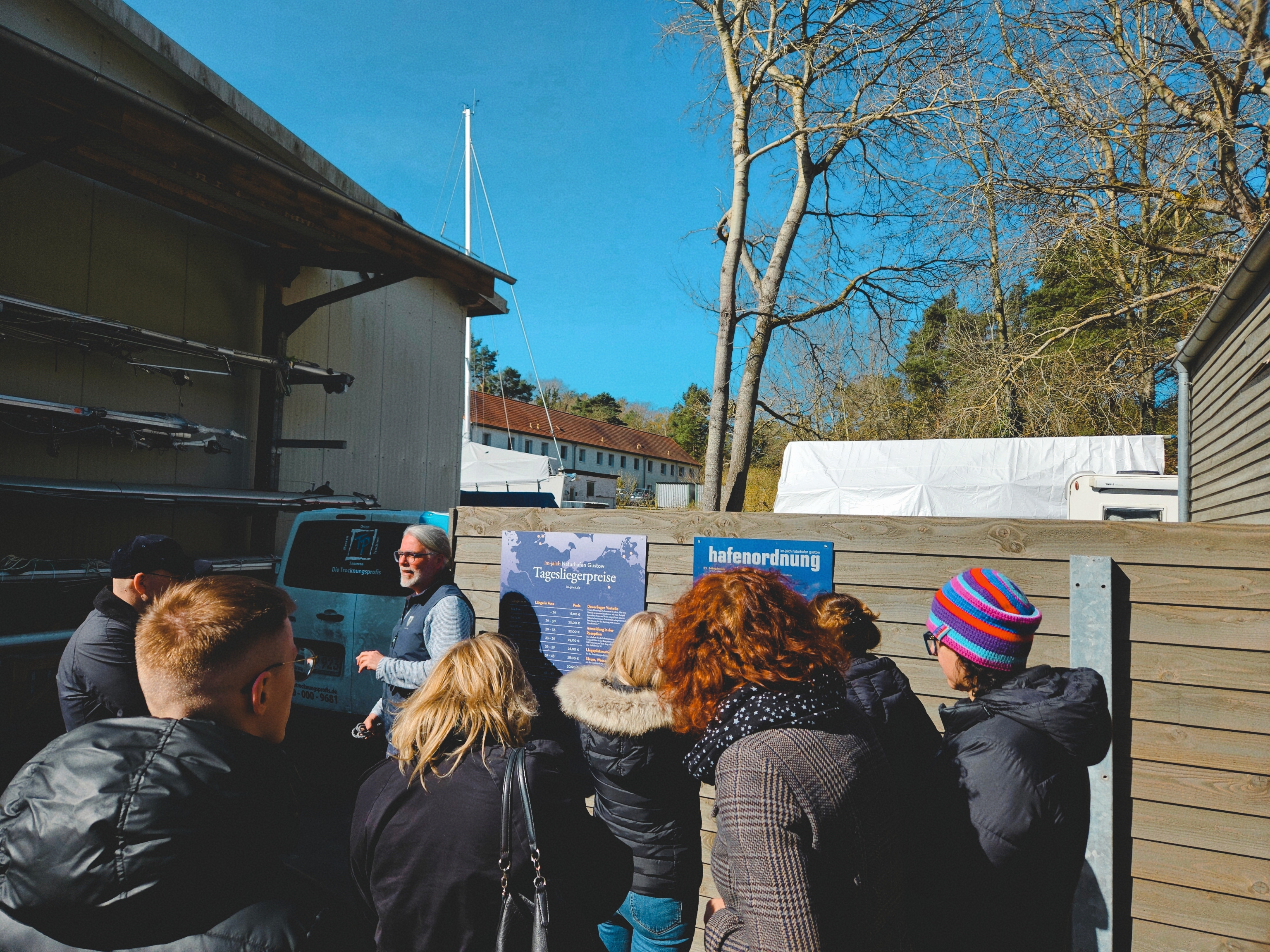
The first day began with a morning visit to Gustow Marina on Rügen Island. Located within the Natura 2000 site in the scenic Greifswald Bay, this marina impresses not only with its landscape but also with its commitment to the local ecosystem. Till Jaich, the marina manager, spoke about the daily challenges of managing such a site – from wastewater treatment and oil spill prevention to protecting coastal reed beds. The marina implements numerous eco-friendly practices, such as "green roofs" one of which is home to bees producing honey sold in a local shop. Here, ecology is not an add-on, but the core of the marina’s philosophy.
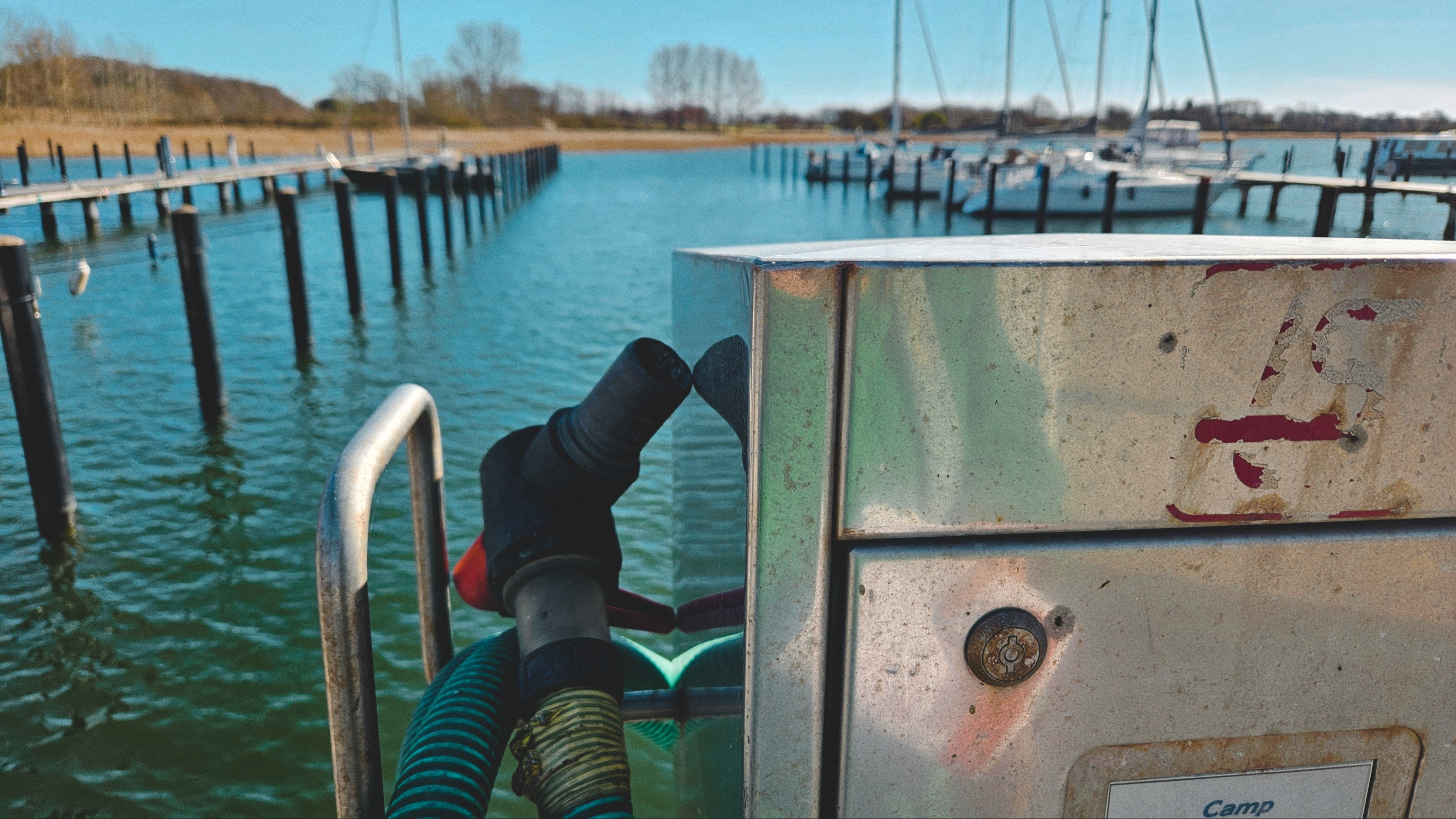
After the talk, participants toured the marina to view its infrastructure. They observed what a modern, sustainable marina looks like: waste sorting stations, onboard sewage collection services, energy-efficient lighting, and educational signs for sailors. These may seem like simple solutions, but across the Baltic, they can make a significant difference.
Oil Spill Response Training – THW Stralsund in Action
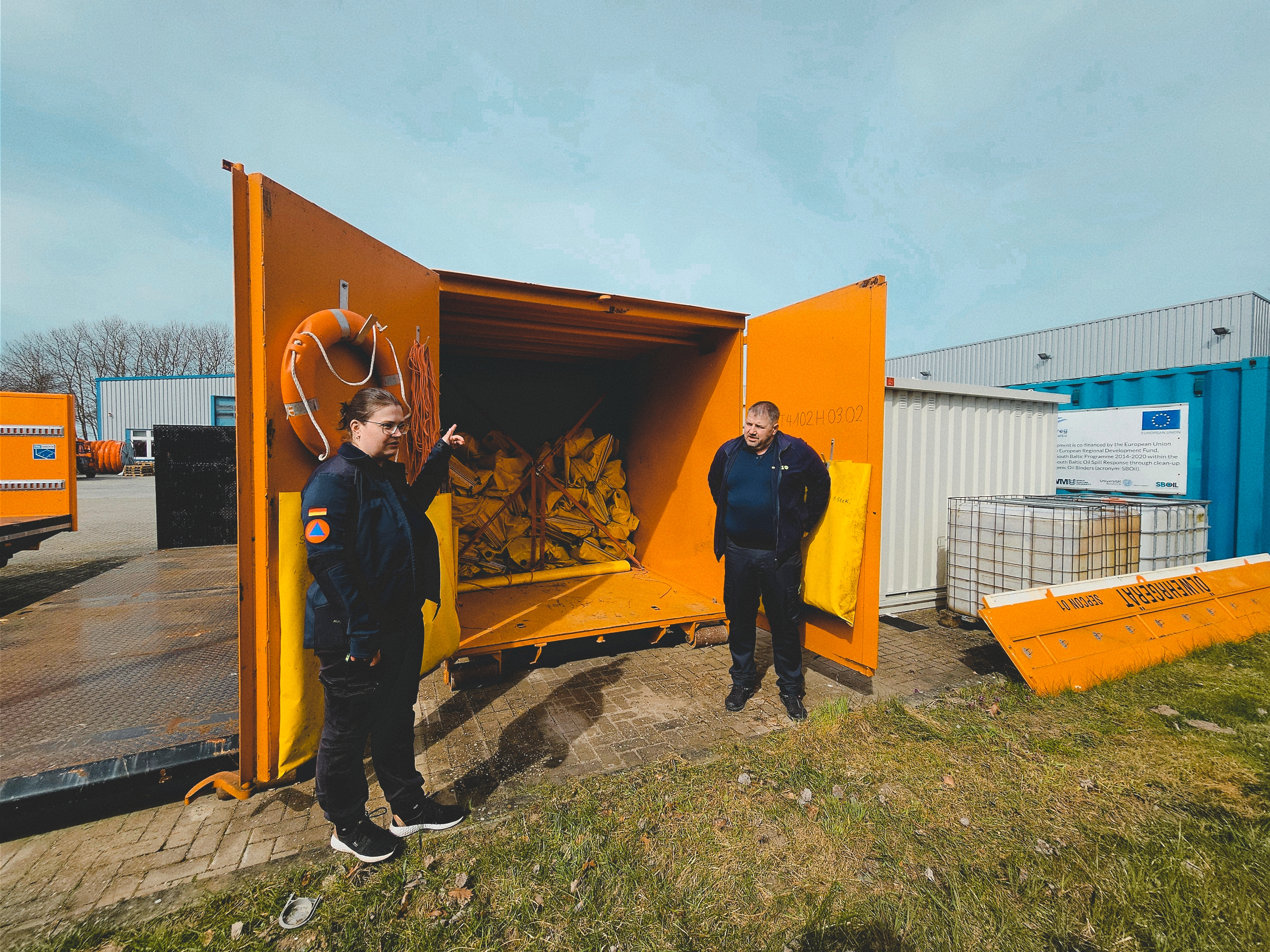
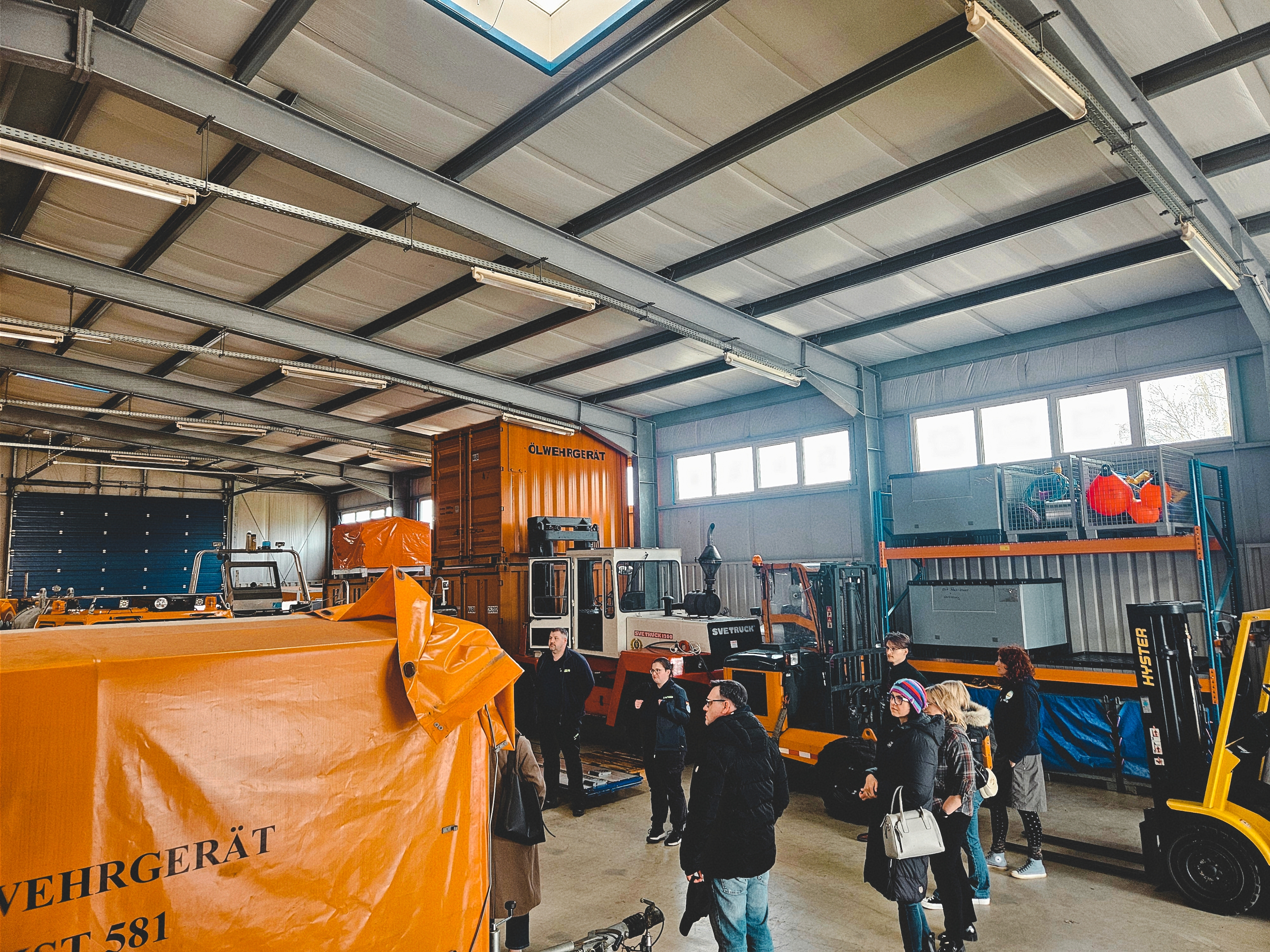
On the second day, the group met with the Technisches Hilfswerk (THW) Stralsund - Germany’s federal technical relief agency. After a brief theoretical introduction on managing hazardous substance spills in marinas, the group visited the technical facilities where they were shown equipment such as floating oil booms, absorbents, and drones used for monitoring and incident documentation. THW experts gave a detailed explanation of spill response protocols, emphasizing the importance of swift action. In the enclosed and low-oxygen environment of the Baltic Sea, even small spills can have serious consequences for local flora and fauna.
Partner Workshops – Exchange of Experience and Action Planning
A key part of the visit were the workshops, where partners shared their experiences, discussed project progress, and planned future actions – especially the selection of pilot infrastructure installations and the scope of communication and educational activities. Several concrete ideas emerged: installing modern sewage and greywater reception stations (to help sailors dispose of waste in an environmentally friendly way), setting up photovoltaic panels and small wind turbines (providing green energy for marina lighting and devices), and introducing a system of “eco-discounts” (e.g., reduced port fees for boats that sort waste or use green technologies).
All these ideas have a common goal to shift consumer behavior in marinas so that sustainability becomes an organic part of sailing culture. The idea is that well- designed investments and facilities will nudge marina users toward more sustainable practices (for example, if a marina offers a convenient and free sewage disposal service, sailors are more likely to use it rather than dump waste overboard). Importantly, this impact can go beyond the marina itself – studies show that when an organization (or a workplace) promotes pro-environmental norms, individuals tend to carry those habits into their personal lives. In other words, green marinas can help shape green sailors – even beyond the port – which aligns perfectly with the mission of the ECOMARINAS project.
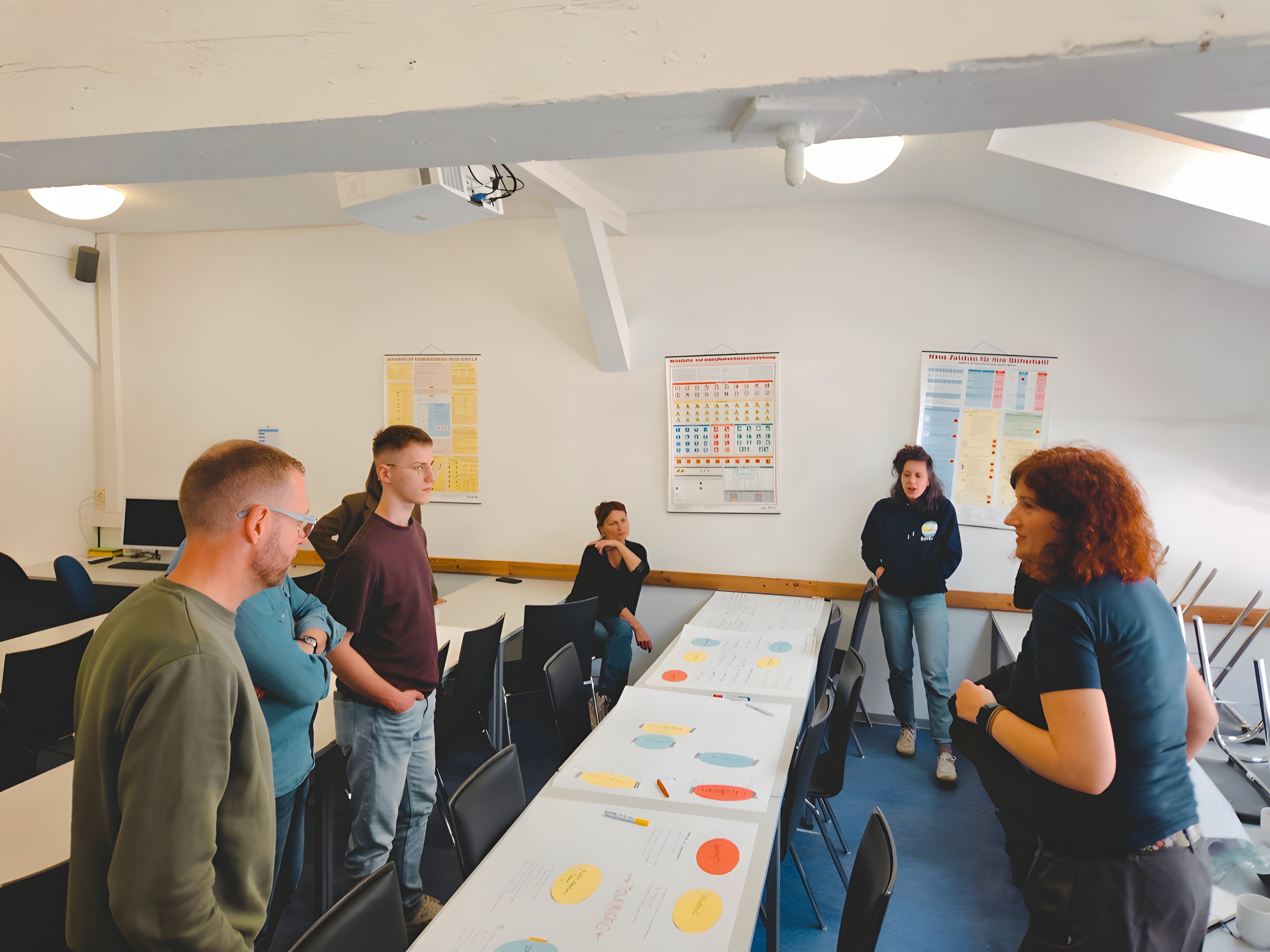
Topics discussed included Baltic Sea eutrophication, waste, chemicals, and invasive species such as F. enigmaticus, which has been observed to occur in massive numbers on boat hulls since 2020. There was also discussion on the role of marinas in education and on what can motivate people to truly care.
In conclusion, several important questions were raised: What do we want to achieve? Why is it worth caring for water? What can each of us do right now? ECOMARINAS does not offer simple answers, but it shows that change is possible – it starts with a conversation, an idea, and with a marina such as the one at the end of Rügen, where even the bees work for a healthier Baltic Sea.